Where human review belongs in an AI workflow
Human review should be placed where an AI error would change a customer outcome, a commitment, or a record someone relies on.

By Danish Khan
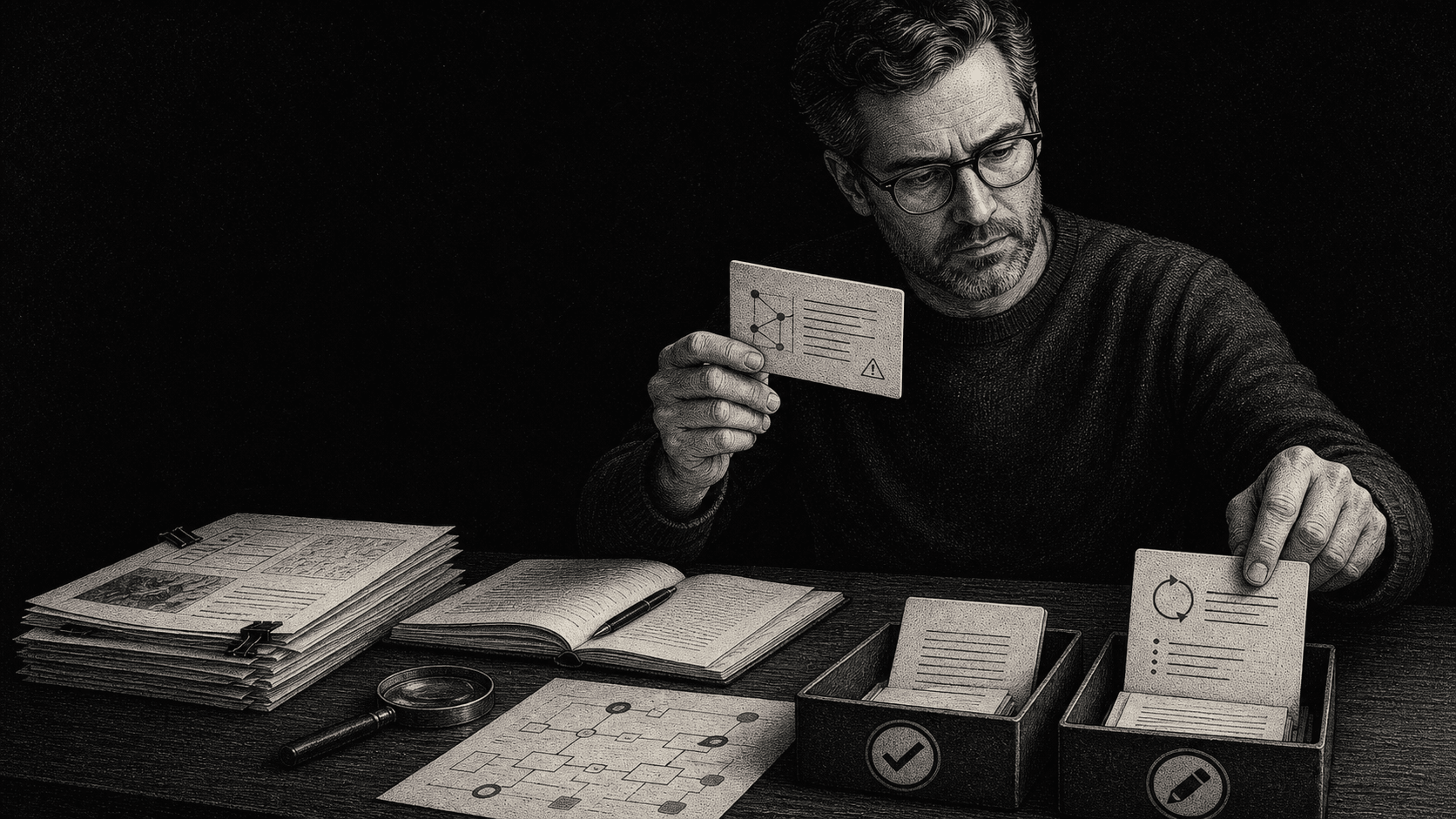
Review is not a sign that the product failed
There is a temptation to treat human review as a temporary inconvenience: something an AI system will eventually outgrow. In practice, review is often the part of the workflow that makes automation usable.
The question is not whether a person should approve every output. That would only recreate manual work. The useful question is where an error would matter enough to deserve a human decision.
For Siela, a draft task can be low risk. A message sent to a customer, a changed CRM stage, or a calendar action can carry a higher cost. The workflow should reflect that difference.
Assess the consequence, not the novelty
An action does not need to be dramatic to deserve review. A small wrong detail can have a large downstream effect when other people or systems rely on it.
Consider three levels:
- Assist: summarise, sort, or suggest. The user can use the output when it helps.
- Propose: prepare an action, but make the source and edit controls visible before it is applied.
- Act: execute automatically only when the rule is clear, the outcome is reversible, and the user has deliberately enabled it.
The NIST AI Risk Management Framework is useful because it frames risk management as an ongoing practice connected to the context of use. The same model output can be harmless in one setting and consequential in another. A system needs to be designed around the decision it affects.
Put review next to the source
Review becomes slow when it asks a person to trust an isolated conclusion. It becomes faster when the system shows the exact evidence behind the proposal.
If an assistant wants to create a follow-up task, show the relevant sentence from the meeting note. If it wants to update a contact record, show the message or event that produced the change. Context lets the user make a correction in seconds instead of opening five tabs to reconstruct what happened.
This also makes the system more honest. It is saying, “Here is what I saw, and here is what I think should happen,” rather than implying an invisible process is always correct.
Make correction normal
People will disagree with a proposal for good reasons. The conversation may have changed after the meeting. A customer may have a preferred process that the system cannot see. Or the AI may simply have misunderstood a name, date, or commitment.
Good review design makes three outcomes equally easy:
- approve the proposed action;
- edit the action before it is applied;
- reject it and explain why, when useful.
An undo path matters too. Users need a safe way back when a correct-looking action turns out to be wrong in context.
Automate the stable parts
The best candidates for automatic action are boring, explicit, and reversible. Formatting a date, applying a known tag, or moving a completed task can be automated once the rule is clear. Decisions involving intent, relationships, money, legal consequences, or customer communication deserve stronger controls.
That is not a limitation of AI. It is a way to use AI where it genuinely improves the work while preserving the person’s responsibility for consequential choices.
The goal is accountable speed
Human review should not be a bureaucratic checkpoint added after the fact. It should be a short, well-designed handoff that makes an AI workflow faster to trust.
When review is placed at the right points, people get the speed of automation and the confidence that important work still has an accountable owner.