Building, growing,
and telling better stories.
Notes from the intersection of AI products, growth systems and the creative work that taught me how people pay attention.

How I got Siela’s first 10 users in two weeks
Direct conversations, a rough first version, and the small decisions that helped Siela find its first users.

What to do after a small launch
A small launch is the beginning of a learning cycle: observe real behaviour, follow up quickly, and choose one next improvement.
Read note
Turn customer questions into content people can find
The most useful content topics are often already present in sales calls, onboarding questions, and support conversations.
Read note
Growth operations for a small team
A small team needs a visible weekly rhythm for learning, shipping, and following up\u2014not another giant growth spreadsheet.
Read note
Why retention comes before referrals
Referral mechanics can spread a good experience. They cannot repair a product people do not have a reason to return to.
Read note
Onboarding is a growth channel
Acquisition creates a first visit. Onboarding decides whether that attention turns into a useful first experience.
Read note
The case for founder content before a big brand budget
Founder content is not a substitute for a brand. It is a practical way to earn clarity, trust, and useful market feedback before scale.
Read note
How to find the message that resonates before scaling it
Find the language people recognise in a real conversation before you buy more attention for it.
Read note
Growth experiments should teach, not just perform
A growth experiment is valuable when it reduces uncertainty\u2014not only when a dashboard moves for a week.
Read note
Cold outreach works better when there is a real reason to write
A useful outbound message starts with relevance, makes a modest ask, and treats compliance as part of the craft.
Read note
How to build a prospect pipeline without turning people into rows
A useful prospect pipeline preserves context, relevance and a clear reason to contact someone.
Read note
Measuring growth without vanity metrics
A useful growth metric should change a decision, not simply make a chart look encouraging.
Read note
Use-case-led positioning beats broad category claims
The clearest product promise starts with an urgent situation a person already recognises, not the category the team wants to own.
Read note
How to find your first design partners
Good design partners share a real problem, make time to work through it, and are honest when the product is not helping.
Read note
Start with conversations, not campaigns
Before scaling a message, learn what real people are trying to solve and the words they use to describe it.
Read note
Build a landing page that answers one question well
A strong landing page helps a specific person decide whether the product can help with the problem in front of them.
Read note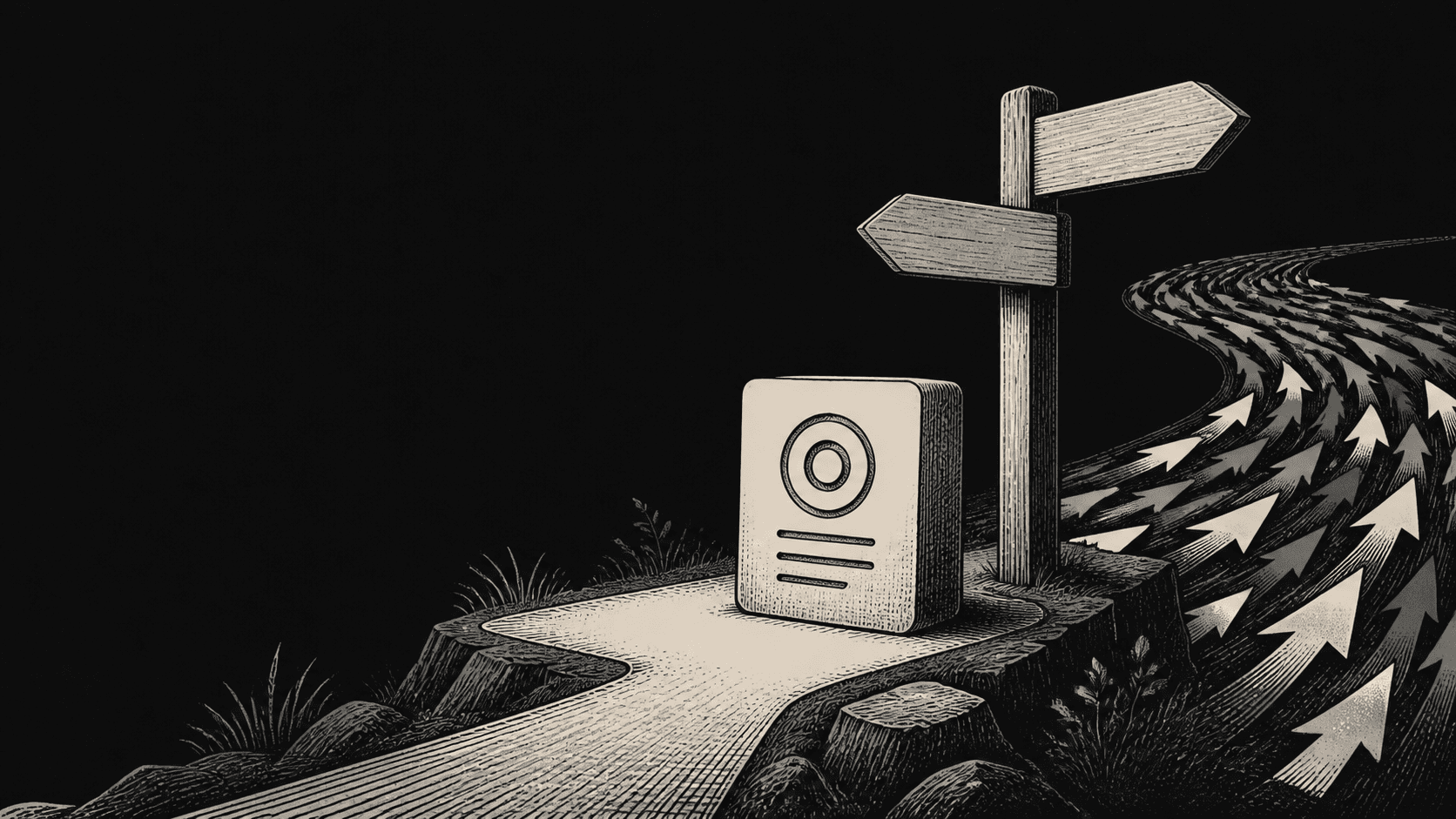
Why positioning comes before paid acquisition
Paid acquisition can amplify a clear promise. It cannot repair a message that the right customer does not recognise.
Read note
A practical growth loop for a new product
A growth loop is a useful customer outcome that creates the next opportunity for the product to be discovered.
Read note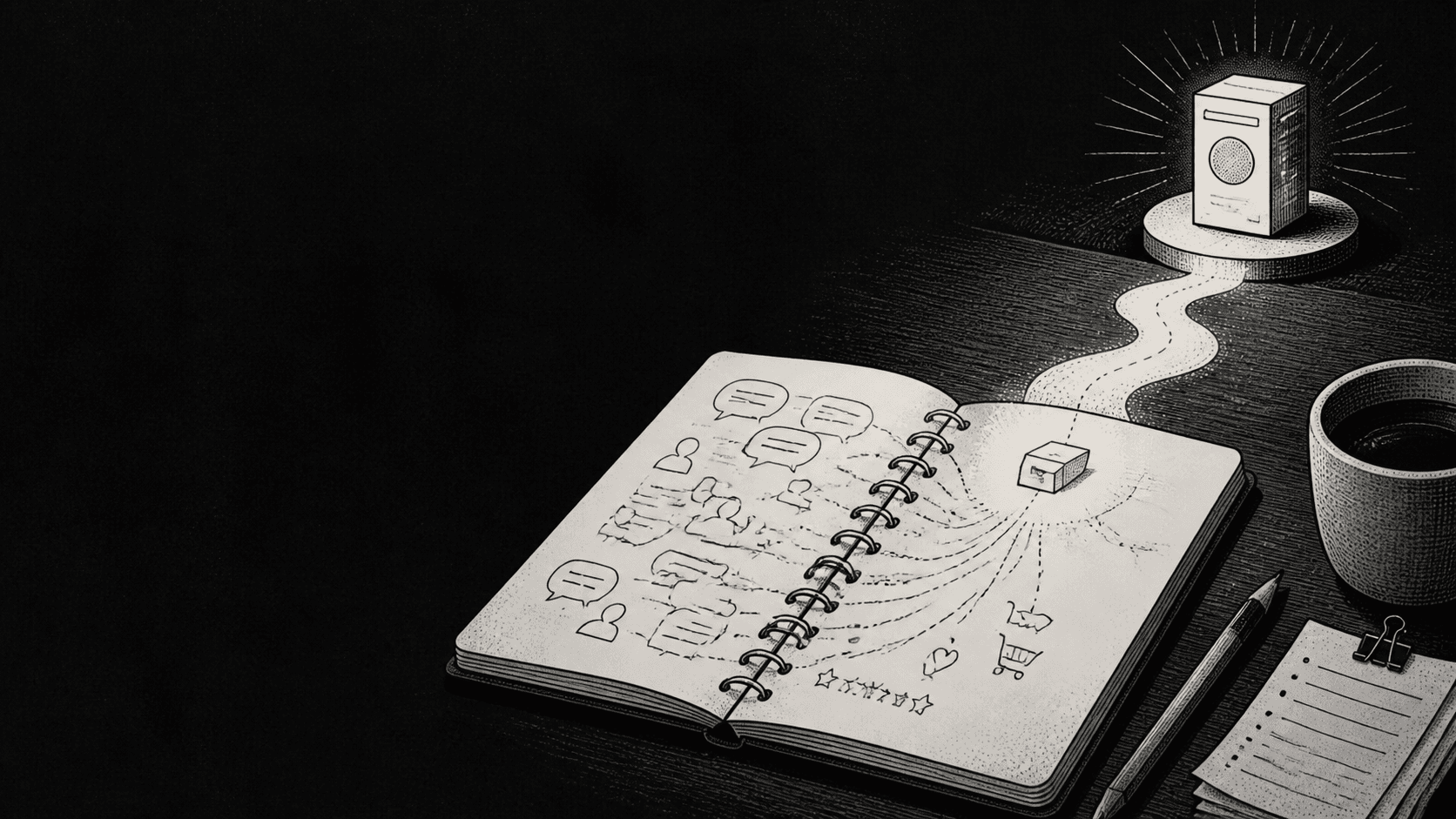
Founder-led growth starts with listening
Early growth is not a channel trick. It starts with learning the words, worries and workarounds behind a real customer problem.
Read note
When to kill a feature instead of improving it
A feature that is not solving a meaningful problem can consume attention that the core product needs.
Read note
A simple product decision log for early teams
A lightweight decision log helps early teams remember the evidence behind product choices and learn faster.
Read note
Why product velocity still needs judgment
Moving quickly matters. Knowing what to ship, what to protect and what to learn matters more.
Read note
Building with AI is not a strategy
AI can change how a product solves a problem. It does not decide which problem deserves to be solved.
Read note
How to write product copy for AI features without overpromising
Clear AI product copy names the job, the context and the user's control instead of making impossible promises.
Read note
Privacy basics for an AI workspace
A practical privacy baseline for products that use workplace context to make AI useful.
Read note
How to make an AI feature feel reliable
Reliability is not only a model-quality problem. It is a product-design decision about clarity, control and recovery.
Read note
The difference between an agent and an automation
A practical way to choose between a reliable workflow and an AI system that needs judgment.
Read note
Why AI products need context before they need more prompts
Better AI output does not begin with a cleverer prompt. It begins with the relevant facts, standards, permissions, and history around the job.
Read note
Where human review belongs in an AI workflow
Human review should be placed where an AI error would change a customer outcome, a commitment, or a record someone relies on.
Read note
How to design AI reminders that help instead of nag
A useful reminder arrives with a reason, at a moment when someone can act. Everything else is noise competing for attention.
Read note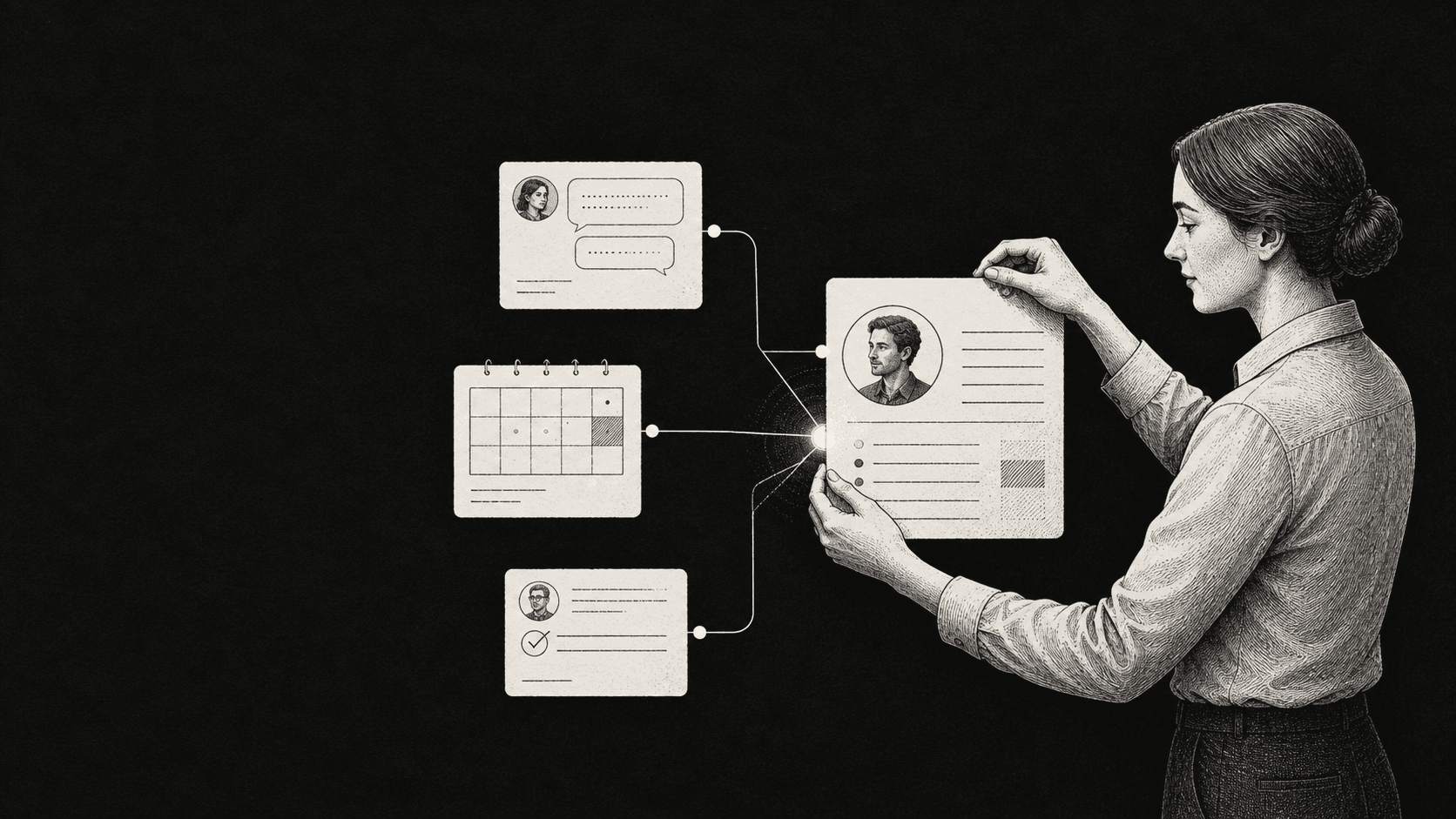
CRM updates are a workflow problem, not a discipline problem
When a CRM record is missing context, the answer is rarely “remind people harder.” The workflow needs to make the correct update easier than skipping it.
Read note
Turning meeting notes into work that actually moves
Meeting notes are only useful when decisions become visible actions with an owner, a time, and a place to follow up.
Read note
User interviews that actually change product decisions
A useful interview is not a vote on your roadmap. It is a way to understand the work, language, and trade-offs behind a real problem.
Read note
What an AI-native workspace should actually do
An AI workspace should reduce the work left behind by meetings, messages, and decisions. The test is not how clever it sounds; it is whether a person has fewer loose ends.
Read note