Why positioning comes before paid acquisition
Paid acquisition can amplify a clear promise. It cannot repair a message that the right customer does not recognise.

By Danish Khan
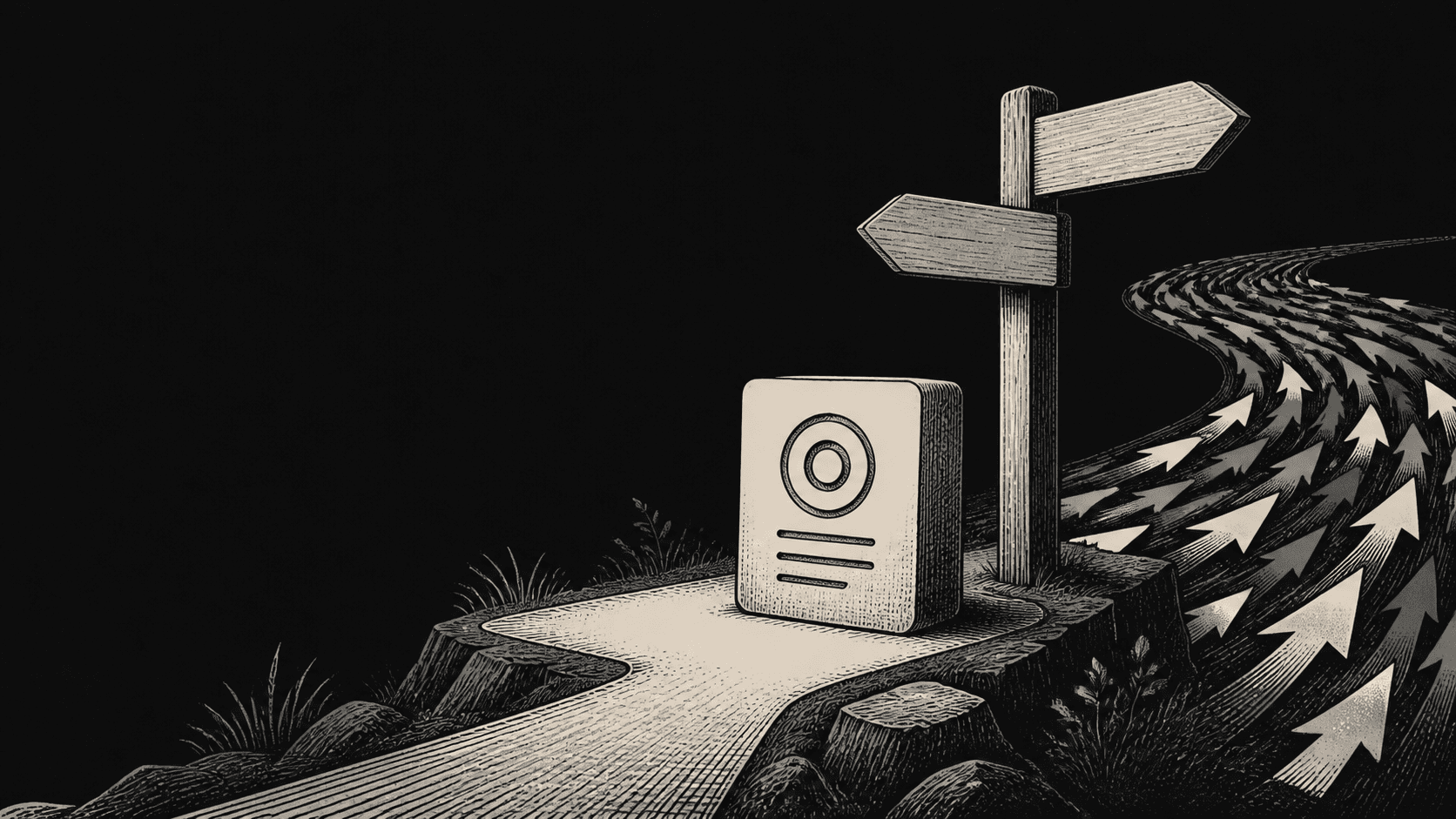
Traffic makes a weak message more expensive
Paid acquisition can be useful once a product has a clear audience and a clear promise. Before that, it often produces a misleading result: people click, the team sees activity, and the page fails to convert because no one can quickly tell whether the product is for them.
The problem is not the channel. It is the message that enters the channel.
Positioning gives a product a way to be understood. It answers three practical questions: who is this for, what important job does it help them do, and why is this a better way to do it now?
Make the first sentence do real work
A homepage headline does not need to explain everything. It does need to give the right visitor a reason to continue.
Compare a category label with a use-case promise:
- \u201cThe AI operating system for work.\u201d
- \u201cTurn client calls into reviewed follow-ups and next steps.\u201d
The first may sound ambitious. The second gives a person a concrete moment to recognise. The stronger message is not necessarily shorter or more clever. It is closer to the urgent work the customer already has.
Match the promise all the way through
People who click an ad arrive with an expectation. If the page changes the message, introduces a different audience, or hides the promised action behind vague copy, the click is unlikely to become useful.
Google\u2019s guidance on ads and landing pages makes this practical point: ad text, keywords, landing-page content, and call to action should closely match. That alignment is good advertising hygiene, but it is also basic product communication.
Before spending more, make sure the following tell the same story:
- the ad or outreach message;
- the page headline;
- the first visual or product example;
- the call to action;
- the first moment after someone signs up.
If they do not, the product is asking a stranger to complete the translation.
Test positioning in conversations first
You do not need an ad budget to test a message. Use customer calls, personal outreach, a focused landing page, and short product demos. Notice where people lean in, where they ask for clarification, and what words they use to repeat the value back to you.
A promising message creates recognition. The person says something like, \u201cThat is exactly the part that takes me too long,\u201d not \u201cInteresting, what does it do?\u201d
That feedback is more useful than a high clickthrough rate on an abstract claim. It tells you whether the message maps to a real problem.
Use paid acquisition after the answer is clearer
Once the product has a defined use case, a focused audience, and a page that reflects the promise, paid acquisition becomes a way to learn at a larger scale. You can test which language attracts the right people, which intent converts, and whether the product holds up after the click.
The order matters. Positioning first gives the acquisition work something coherent to amplify. Without it, every campaign is also a product-discovery experiment, a messaging experiment, and a landing-page experiment at the same time.
Clarity is not a finishing touch. It is the prerequisite that makes paid attention worth buying.